The Influence of GeoGebra-assisted flipped classroom learning model on mathematical problem-solving abilities and self-regulated learning of junior high school students
DOI:
https://doi.org/10.66161/708474Keywords:
Flipped Classroom, GeoGebra, Mathematical Problem-Solving Ability, Self-Regulated LearningAbstract
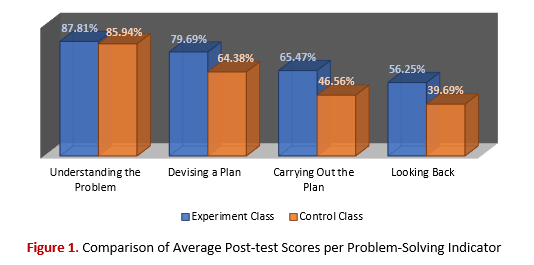
This study aims to determine the effect of the GeoGebra-assisted flipped classroom learning model on the mathematical problem-solving abilities and self-regulated learning of junior high school students. This research employed a quasi-experimental design with a Pretest-Posttest Control Group Design. The study was conducted at SMP Negeri 1 Ngemplak, involving grade IX students selected through simple random sampling. Data collection utilized a problem-solving ability test and a self-regulated learning questionnaire, which were analyzed using the Independent Samples t-test at a significance level of 0.05. The results showed that: (1) There is a positive and significant influence of the GeoGebra-assisted flipped classroom model on students' mathematical problem-solving abilities (Sig. 0.001 < 0.05); (2) There is no significant influence of the model on students' self-regulated learning (Sig. 0.834 > 0.05). Detailed analysis reveals that while the model effectively enhances cognitive skills through dynamic visualization and active problem-solving, it has not significantly impacted affective aspects due to the short duration of implementation and the cognitive load associated with adapting to new technology.
References
Abeysekera, L., & Dawson, P. (2015). Motivation and cognitive load in the flipped classroom: definition, rationale and a call for research. Higher Education Research and Development, 34(1), 1–14. https://doi.org/10.1080/07294360.2014.934336
Aien, N., Laswadi, L., & Sari, M. (2025). Penggunaan Aplikasi Geogebra dalam Pembelajaran Matematika terhadap Kemampuan Pemahaman Konsep dan Minat Belajar Siswa. Kognitif: Jurnal Riset HOTS Pendidikan Matematika, 5(1), 71–87. https://doi.org/10.51574/kognitif.v5i1.2755
Atmojo, I. R. W., Ardiansyah, R., Adi, F. P., Chumdari, C., Saputri, D. Y., & Wahyuningtyas, M. (2023). The Relationship between Self-Regulated Learning and Students’ Critical Thinking Skills. Mimbar Sekolah Dasar, 10(3), 513–526. https://doi.org/10.53400/mimbar-sd.v10i3.61151
Auliza, E., & Widyastuti, E. (2024). Pengaruh Model Pembelajaran Flipped Classroom Tipe Peer Instruction Flipped Berbantuan Video Pembelajaran Terhadap Kemampuan Pemecahan Masalah Dan Kemandirian Belajar. MES: Journal of Mathematics Education and Science, 9(2), 166–177. https://doi.org/10.30743/mes.v9i2.8592
Barkhorn, A., Chen, M. S., & Bonanno, G. A. (2025). Motivation and regulatory flexibility: Testing the moderating role of optimism and coping self-efficacy. Personality and Individual Differences, 244, 113232. https://doi.org/10.1016/j.paid.2025.113232
Chen, O., Retnowati, E., & Kalyuga, S. (2020). Element interactivity as a factor influencing the effectiveness of worked example–problem solving and problem solving–worked example sequences. British Journal of Educational Psychology, 90(S1), 210–223. https://doi.org/10.1111/bjep.12317
Daumiller, M., & Dresel, M. (2019). Supporting Self-Regulated Learning With Digital Media Using Motivational Regulation and Metacognitive Prompts. The Journal of Experimental Education, 87(1), 161–176. https://doi.org/10.1080/00220973.2018.1448744
Hasibuan, Y. R., Khairani, N., & Surya, E. (2022). Pengaruh Kemampuan Awal Matematis dan Model Learning Cycle 5e Berbantuan Geogebra untuk Meningkatkan Kemampuan Pemecahan Masalah Matematis Siswa dan Kemandirian Belajar Matematis Siswa. Jurnal Cendekia : Jurnal Pendidikan Matematika, 7(1), 740–750. https://doi.org/10.31004/cendekia.v7i1.2168
Hohenwarter, M., Hohenwarter, J., Kreis, Y., & Lavicza, Z. (2008). Teaching and calculus with free dynamic mathematics software GeoGebra. 11th International Congress on Mathematical Education, 1–9. https://orbilu.uni.lu/bitstream/10993/47219/1/ICME11-TSG16.pdf
Kemendikbudristek. (2022). Salinan Peraturan Menteri Pendidikan, Kebudayaan, Riset, dan Teknologi Republik Indonesia Nomor 7 Tahun 2022 Tentang Standar Isi Pada Pendidikan Anak Usia Dini, Jenjang Pendidikan Dasar, dan Jenjang Pendidikan Menengah. Kementerian Pendidikan, Kebudayaan, Riset, Dan Teknologi, 14.
Lei, X., Fathi, J., Noorbakhsh, S., & Rahimi, M. (2022). The Impact of Mobile-Assisted Language Learning on English as a Foreign Language Learners’ Vocabulary Learning Attitudes and Self-Regulatory Capacity. Frontiers in Psychology, 13(June). https://doi.org/10.3389/fpsyg.2022.872922
Lyapina, I., Sotnikova, E., Lebedeva, O., Makarova, T., & Skvortsova, N. (2019). Smart technologies: perspectives of usage in higher education. International Journal of Educational Management, 33(3), 454–461. https://doi.org/10.1108/IJEM-08-2018-0257
Maulinisa, D. N. (2023). Analisis Kemampuan Pemecahan Masalah Matematika Ditinjau dari Self-Confidence pada Materi Bilangan Bulat. Jurnal Pendidikan Matematika, 10(1), 47–58. https://doi.org/10.18592/jpm.v10i1.10248
Nugroho, H. (2024). Pendekatan stem berbantuan geogebra pada materi SPLDV untuk meningkatkan representasi matematis. Jurnal Ilmiah WUNY, 6(1). https://doi.org/10.21831/jwuny.v6i1.72275
Nugroho, H. (2025). Didactical Design of Gradient Learning Based on Realistic Mathematics Education Using Batik Parang Context. Universitas Negeri Yogyakarta.
Nugroho, H., Desti, D., Kismiantini, K., & Setyaningrum, L. (2025). Integrating GeoGebra into Project-Based Learning to Improve Students ’ Problem-Solving Skill on Circle Topic. Proceedings of the 8th International Symposium on Mathematics Education and Innovation (ISMEI 2024), 35–54. https://doi.org/10.2991/978-2-38476-434-1
Nugroho, H., & Septianisha, N. I. (2025). Improving Students’ Mathematical Representation Skills in Systems of Linear Equations in Two Variables Through Geogebra-Based STEM Approaches: A Quasi-Experimental Study. Jurnal Pendidikan Matematika Dan IPA, 16(1), 67–81. https://doi.org/10.26418/jpmipa.v16i1.78553
Nurdin, A. J., Rejekiningsih, T., & Sumaryati, S. (2023). Facilitating Self-regulated Learning Using Mobile Learning Games. International Journal of Information and Education Technology, 13(11), 1820–1827. https://doi.org/10.18178/ijiet.2023.13.11.1994
Rahmadia, N., Nuranisa, Maulana, R. S., & Maharani, I. (2024). Penggunaan Geogebra dalam Trigonometri. OMEGA: Jurnal Keilmuan Pendidikan Matematika, 3(1), 44–50. https://doi.org/10.47662/jkpm.v3i1.667
Rohmatulloh, & Nindiasari, H. (2022). Meningkatkan Kemampuan Pemecahan Masalah Matematis Melalui Model Pembelajaran Flipped Classroom. Edukatif : Jurnal Ilmu Pendidikan, 4(1), 436–442. https://doi.org/10.31004/edukatif.v4i1.1877
Sari, M., Anggoro, B. S., & Sugiharta, I. (2020). Analisis Peningkatkan Kemampuan Pemecahan Masalah dan Kemandirian Belajar Dampak Flipped Classroom Berbantuan Video Pembelajaran. Nabla Dewantara, 5(2), 94–106. https://doi.org/10.51517/nd.v5i2.228
Schunk, D. H., & Zimmerman, B. J. (1994). Self-Regulation in Education. Routledge.
Suparman, S., Yohannes, Y., & Arifin, N. (2021). Enhancing Mathematical Problem-Solving Skills of Indonesian Junior High School Students through Problem-Based Learning: a Systematic Review and Meta-Analysis. Al-Jabar : Jurnal Pendidikan Matematika, 12(1), 1–16. https://doi.org/10.24042/ajpm.v12i1.8036
Supriatna, U. (2021). Flipped Classroom: Metode Pembelajaran Tatap Muka Terbatas pada Masa Pandemi Covid-19. Ideas: Jurnal Pendidikan, Sosial, Dan Budaya, 7(3), 57–62. https://doi.org/10.32884/ideas.v7i3.408
Tee, K. N., Leong, K. E., & Abdul Rahim, S. S. (2021). A Self-Regulation Model of Mathematics Achievement for Eleventh-Grade Students. International Journal of Science and Mathematics Education, 19(3), 619–637. https://doi.org/10.1007/s10763-020-10076-8
Ulya, H., Sugiman, Rosnawati, R., & Retnawati, H. (2024). Technology-based learning interventions on mathematical problem-solving: a meta-analysis of research in Indonesia. International Journal of Evaluation and Research in Education , 13(1), 292–301. https://doi.org/10.11591/ijere.v13i1.26380
Vera, T. O., Yulia, P., & Rusliah, N. (2021). Peningkatan Kemampuan Pemecahan Masalah Matematis Melalui Model Problem Based Learning dengan Menggunakan Soal-soal Berbasis Budaya Lokal. Logaritma : Jurnal Ilmu-Ilmu Pendidikan Dan Sains, 9(1), 1–14. https://doi.org/10.24952/logaritma.v9i01.2782
Widyastuti, A. C., Permana, D., & Sari, I. P. (2018). Analisis Kemampuan Berpikir Kreatif Matematis Siswa dalam Menyelesaikan Masalah Matematika pada Materi Bangun Ruang Sisi Datar Dilihat dari Gender. JPMI (Jurnal Pembelajaran Matematika Inovatif), 1(2), 145–148. https://doi.org/10.22460/jpmi.v1i2.p145-148
Zimmerman. (2010). Becoming a Self-Regulated Learner : An Overview Becoming a Self-Regulated Learner : An Overview. Theory Into Practice, 5841(2002), 64–70. https://doi.org/10.1207/s15430421tip4102
Zimmerman, B. J. (1989). Models of Self-Regulated Learning and Academic Achievement. In Self-Regulated Learning and Academic Achievement: Theory, Research, and Practice (pp. 1–25). Springer-Verlag
Downloads
Published
How to Cite
Issue
Section
License
Copyright (c) 2025 Instructional Media for Mathematics (IM Math)

This work is licensed under a Creative Commons Attribution-NonCommercial 4.0 International License.