Development of numeracy-oriented questions based on digital simulation
DOI:
https://doi.org/10.66161/708480%20Keywords:
mathematics questions, numeracy skills, digital simulation, question qualityAbstract
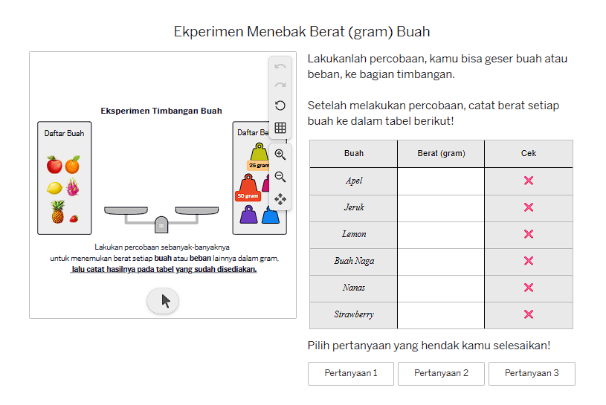
This research aims to: (1) Develop numeracy-oriented mathematics questions based on digital simulation for junior high school students in mathematics learning; and (2) Measure the validity, reliability, and quality of the developed questions. The method used in this study is the 4D development model (Define, Design, Develop, Disseminate), which includes several stages: defining the problem, designing the questions, developing the questions, and disseminating the tested product. The content of the questions includes probability, data analysis, and algebra. The results of this study show that: (1) The developed questions meet the criteria for high content validity based on expert assessments; (2) The construct validity of the questions is good, with a significant correlation coefficient between the questions measuring numeracy skills in the same domain; (3) The reliability of the questions, measured using Cronbach’s Alpha, resulted in 0.907, indicating that the questions are highly reliable; (4) The developed questions have varying levels of difficulty, but most fall within the medium category, with excellent discriminative power, effectively distinguishing students' abilities at different levels of competence.
References
Alibraheim, E. A. (2023). Efficacy of educational platforms in developing the skills of employing augmented reality in teaching mathematics. Eurasia Journal of Mathematics, Science and Technology Education, 19(11). https://doi.org/10.29333/ejmste/13669
Al-jabery, K., Obafemi-Ajayi, T., Olbricht, G., & Wunsch II, D. (2020). 7 - Evaluation of cluster validation metrics. Computational Learning Approaches to Data Analytics in Biomedical Applications, 189–208. https://doi.org/10.1016/B978-0-12-814482-4.00007-3
Amin, S., Kartowagiran, B., & Inang, P. (2018). A factor analysis of an instrument for measuring physical abuse experience of students at school. Research and Evaluation in Education, 4(1), 22–34. https://doi.org/10.21831/reid.v4i1.18831
Anderha, R. R., Maskar, S., & Indonesia, U. T. (2021). Pengaruh Kemampuan Numerasi dalam Menyelesaikan Masalah Matematika terhadap Prestasi Belajar Mahasiswa Pendidikan Matematika. Jurnal Ilmiah Matematika Realistik (JI-MR), 2(1), 1–10. https://doi.org/http://jim.teknokrat.ac.id/index.php/pendidikanmatematika/index
Asnawi, M. H., Annisa, H., Ulum, Moh. M., Arofah, N. L., & Hendrawati, N. E. (2022). Ethnomathematic Exploration At Agung Jami’ Malang Mosque In Improving Students’ Mathematic Problem Solving Ability. IndoMath: Indonesia Mathematics Education, 5(1), 13. https://doi.org/10.30738/indomath.v5i1.13
Damayanti, I. I., Ayu, A., Sariah, U. I., Mustaqfiroh, M., Oktaviani, I. A., & Nursyahidah, F. (2023). Development of Curved Three-Dimensional Shape Learning Media Ethnomathematics-Based Using Augmented Reality. Kreano, Jurnal Matematika Kreatif-Inovatif, 14(1), 86–96. https://doi.org/10.1063/5.0215290
Fauzan, A., Harisman, Y., Yerizon, Y., Suherman, S., Tasman, F., Nisa, S., Sumarwati, S., Hafizatunnisa, H., & Syaputra, H. (2024). Realistic mathematics education (RME) to improve literacy and numeracy skills of elementary school students based on teachers’ experience. Infinity Journal, 13(2), 301–316. https://doi.org/10.22460/infinity.v13i2.p301-316
Fendrik, M., Andhi, R. R., & Nurdiansyah. (2023). Development of Ethnomathematics-Based Online Learning (POBE) for Prospective Teachers. Proceedings of the 3rd International Conference on Education and Technology (ICETECH 2022), 1, 337–344. https://doi.org/10.2991/978-2-38476-056-5_36
Futri, V. I. (2020). Pengembangan instrumen penilaian kemampuan numerasi peserta didik SMP pada pembelajaran matematika. Universitas Negeri Yogyakarta.
Herawaty, D., Widada, W., Anggoro, A. F. D., & Anggoro, S. D. T. (2021). Overcoming Difficulties in Understanding the Linear Equation System Through the Ethnomathematics Approach in the COVID-19 Pandemic. Proceedings of the International Conference on Educational Sciences and Teacher Profession (ICETeP 2020), 532(532), 129–137. https://doi.org/10.2991/assehr.k.210227.022
Kemdikbud. (2016). Peraturan Menteri Pendidikan dan Kebudayaan Nomor 21 Tahun 2016 Tentang Standar Isi Pendidikan Dasar dan Menengah. Menteri Pendidikan dan Kebudayaan Republik Indonesia.
Kurniawan, H., Purwoko, R. Y., & Setiana, D. S. (2023). Integrating cultural artifacts and tradition from remote regions in developing mathematics lesson plans to enhance mathematical literacy. Journal of Pedagogical Research, 8(1), 61–74. https://doi.org/10.33902/JPR.202423016
Kusaeri, Sadieda, L. U., Indayati, T., & Faizien, M. I. (2018). Developing an Assessment Instrument of Higher Order Thinking Skills in Mathematics with in Islamic Context. Journal of Physics: Conference Series, 1097(1), 1–8. https://doi.org/10.1088/1742-6596/1097/1/012151
Lestari, R., Prahmana, R. C. I., Chong, M. S. F., & Shahrill, M. (2023). Developing Realistic Mathematics Education-Based Worksheets for Improving Students’ Critical Thinking Skills. Infinity Journal, 12(1), 69–84. https://doi.org/10.22460/infinity.v12i1.p69-84
Luttenberger, S., Wimmer, S., & Paechter, M. (2018). Spotlight on math anxiety. Psychology Research and Behavior Management, 11, 311–322. https://doi.org/10.2147/PRBM.S141421
Maulana, R., Smale-Jacobse, A., Helms-Lorenz, M., Chun, S., & Lee, O. (2020). Measuring differentiated instruction in The Netherlands and South Korea: factor structure equivalence, correlates, and complexity level. European Journal of Psychology of Education, 35(4), 881–909. https://doi.org/10.1007/s10212-019-00446-4
Mohamad et al. (2024). Differentiated guidance services in improving numeracy skills among secondary school students. Journal of Counseling and Development, 102(1), 112–129. https://doi.org/https://doi.org/10.1002/jcad.12487
Mutodi, P., & Ngirande, H. (2014). Exploring mathematics anxiety: Mathematics students’ experiences. Mediterranean Journal of Social Sciences, 5(1), 283–294. https://doi.org/10.5901/mjss.2014.v5n1p283
Nugroho, H. (2024). Pendekatan stem berbantuan geogebra pada materi SPLDV untuk meningkatkan representasi matematis. Jurnal Ilmiah WUNY, 6(1). https://doi.org/10.21831/jwuny.v6i1.72275
Nugroho, H., Ishartono, N., Agustiani, R., & Fitriani, N. (2024). Integrating Adobe Flash Professional CS6 into ethnomathematics-based learning media to improve students’ understanding of math. The 7th Progressive and Fun Education International Conference, 1–20. https://doi.org/10.1063/5.0183038
OECD. (2023). PISA 2022 Results: The State of Learning and Equity in Education. OECD Publishing.
Putri, T. A., Fadilah, N., Anjasari, T., & Sari, Y. M. (2025). Development of Ethno-PMRI based E-Worksheet with Mayang Rontek Dance Context on Plane Figures of Geometry Materials. Mathematics Education Journal, 19(1), 99–118. https://doi.org/10.22342/jpm.v19i1.pp99-118
Rafi, I., Apino, E., Hadiana, D., Lydiati, I., & Rosyada, M. N. (2023). What might be frequently overlooked is actually still beneficial : Learning from post national-standardized school examination. Pedagogical Research, 8(1), 1–15. https://doi.org/10.29333/pr/12657
Reffiane, F., Sudarmin, Wiyanto, & Saptono, S. (2021). Developing an Instrument to Assess Students’ Problem-Solving Ability on Hybrid Learning Model Using Ethno-STEM Approach through Quest Program. Pegem Egitim ve Ogretim Dergisi, 11(4), 1–8. https://doi.org/10.47750/pegegog.11.04.01
Retnawati, H. (2016). Analisis Kuantitatif Instrumen Penelitian. Parama Publishing.
Setyaningrum, W., Wijaya, A., Irsyad, A. N., & Purbaningrum, M. (2024). Developing Digital Simulation to Improve Students’ Numeracy Skills. Proceedings of the 6th International Conference on Current Issues in Education (ICCIE) 2023, 292–303. https://doi.org/10.2991/978-2-38476-245-3_31
Silmi Juman, Z. A. M., Mathavan, M., Ambegedara, A. S., & Udagedara, I. G. K. (2022). Difficulties in Learning Geometry Component in Mathematics and Active-Based Learning Methods to Overcome the Difficulties. Shanlax International Journal of Education, 10(2), 41–58. https://doi.org/10.34293/education.v10i2.4299
Suripah, S., Zetriuslita, Z., Putri, M. E., & Desvianti, E. (2024). Technology integration to improve numeracy skills of dyscalculia students : Obstacles of inclusion schools in Indonesia. Edelweiss Applied Science and Technology, 8(6), 6589–6599. https://doi.org/10.55214/25768484.v8i6.3411
Suryawan, I. P. P., Jana, P., Pujawan, I. G. N., Hartawan, I. G. N. Y., & Putri, P. E. W. (2023). Ethnomathematically Controversial Problem-Based Multimodal Approach in Terms of Students ’ Critical Thinking Ability. Pegem Journal of Education and Instruction, 13(3), 323–336. https://doi.org/10.47750/pegegog.1
Thiagarajan, S. (1976). Instructional development for training teachers of exceptional children: A sourcebook. Journal of School Psychology, 14(1), 75. https://doi.org/10.1016/0022-4405(76)90066-2
Wahyuni, R., Juniati, D., & Wijayanti, P. (2024). How do Math Anxiety and Self-Confidence Affect Mathematical Problem Solving? TEM Journal, 13(1), 550–560. https://doi.org/10.18421/TEM131-58
Downloads
Published
How to Cite
Issue
Section
License
Copyright (c) 2024 Instructional Media for Mathematics (IM Math)

This work is licensed under a Creative Commons Attribution-NonCommercial 4.0 International License.